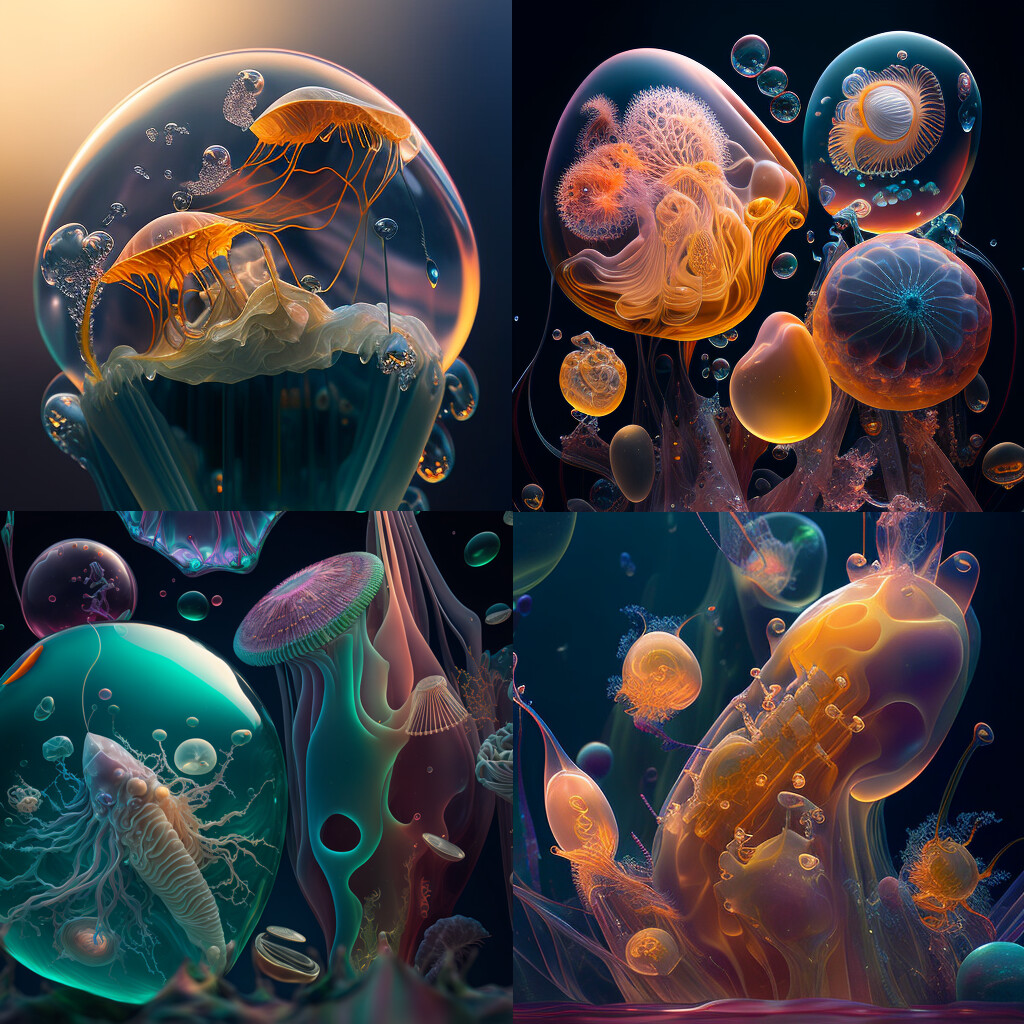
Siliconoids
Instead of floating through clouds of gas, silicon-based life forms on this distant planet would now be adapted to survive and thrive in liquid silicon. They would have silicon-based structures that allow them to float and move through the liquid, and specialized organs or structures that allow them to extract nutrients and energy from the silicon itself.
Because liquid silicon is a highly reactive and potentially hazardous substance, these silicon-based life forms would likely have evolved a number of adaptations to protect themselves from the liquid's corrosive effects. They might have tough, durable skin or exoskeletons, or they might secrete special chemicals that act as a barrier against the liquid.
In addition to these silicon-based life forms, there are still sentient, jellyfish-like creatures living in exotic liquids on this distant planet. These creatures are adapted to survive in liquids that would be toxic or inhospitable to other life forms, thanks to specialized adaptations such as tentacles or appendages that allow them to move through the liquid and sense their surroundings.
These jellyfish-like creatures are still highly intelligent, with the ability to communicate and interact with other members of their species and with other life forms. They have developed complex social structures and cultures, living in communities and engaging in activities such as hunting, mating, and caring for their young.
Overall, the diversity of life on this distant planet is still truly remarkable, with all sorts of strange and bizarre forms of life coexisting and interacting in a variety of exotic environments. Even with the change in the type of liquid that silicon-based life forms inhabit, the planet remains a place that is constantly surprising and full of mystery, where new discoveries and insights about the nature of life are waiting to be made.